Investment · February 16, 2026 · 5 min read
Why Starting to Invest in Your 20s Beats Investing More Later
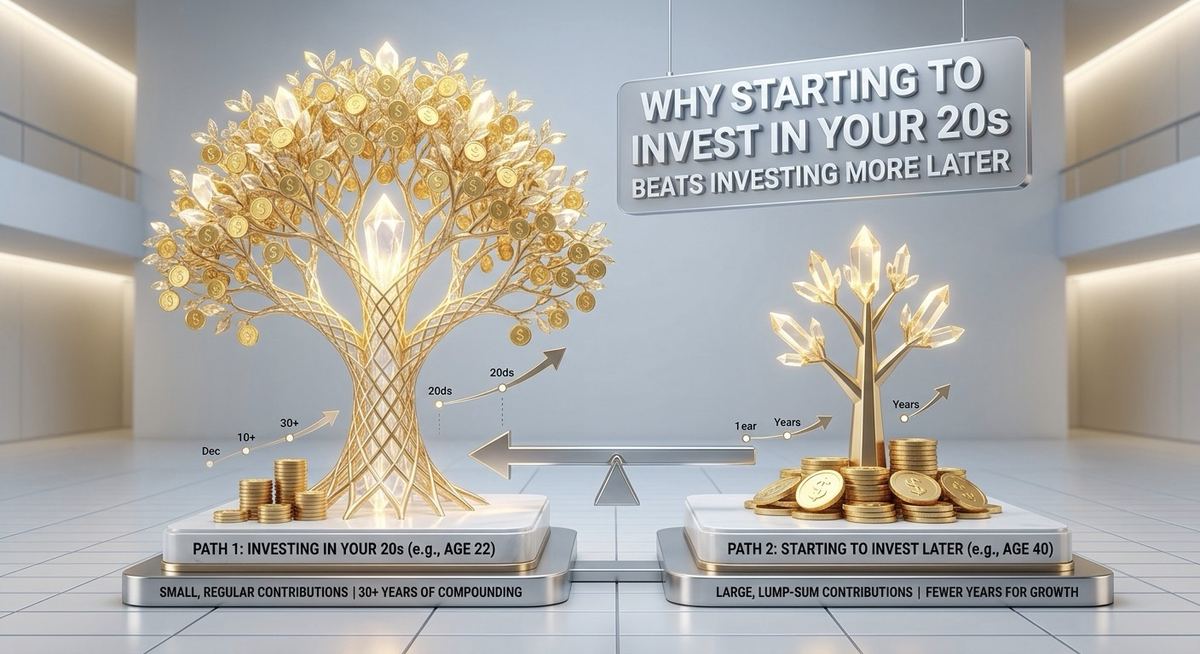
This is one of the most consistently repeated pieces of financial advice, and it holds up under real math: time in the market tends to outweigh the amount invested, once compound growth has enough years to work.
The mechanism behind the advantage
Every year an investment sits and grows, that growth itself becomes part of the base for the following year's growth. Money invested a decade earlier has a full decade of extra compounding that later contributions, no matter how large, simply cannot fully replicate.
Quantifying the gap directly
Testing two scenarios — a smaller monthly amount starting a decade earlier, versus a larger amount starting later — through an Investment Calculator usually reveals the earlier, smaller contributor ends up ahead, sometimes by a wide margin, despite contributing less money in total.
This doesn't mean waiting is hopeless
The lesson isn't that starting later is pointless — it's that starting later typically requires either higher monthly contributions or a longer working horizon to reach a similar outcome. Recognizing this early makes it easier to adjust the plan realistically rather than being discouraged by it.
The math, made concrete
Investing $300/month from age 25 to 65 (40 years) at a 7% return grows to roughly $719,000. Investing $500/month from age 35 to 65 instead (30 years, nearly double the monthly amount) grows to only about $566,000 — the earlier, smaller contributor ends up meaningfully ahead, purely due to the extra decade of compounding.
Frequently Asked Questions
Related Calculators
Published February 16, 2026. This article is for general informational purposes only — read our disclaimer.