Mortgage & Real Estate · February 11, 2026 · 5 min read
FHA vs Conventional Loans: Which One Fits You?
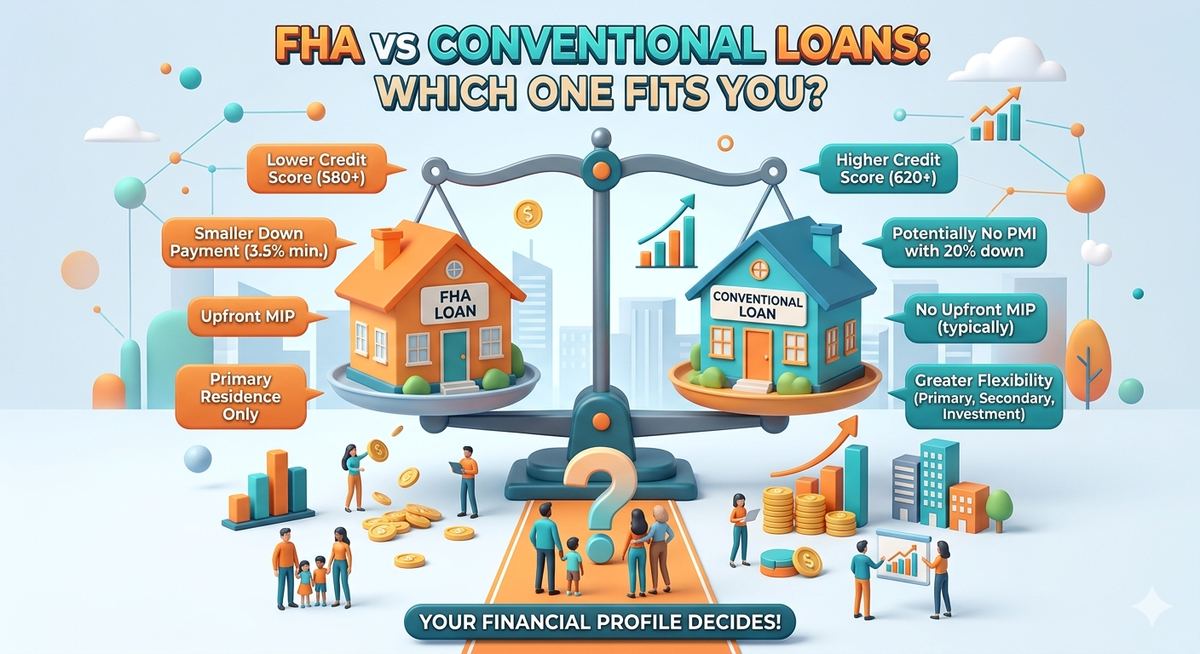
These two loan types serve overlapping but distinct groups of borrowers. The right choice depends heavily on your credit profile, down payment savings, and how long you plan to stay in the home.
Down payment and credit requirements
FHA loans allow down payments as low as 3.5% with a credit score of 580 or higher, making them accessible to buyers with less cash saved or a shorter credit history. Conventional loans can also go as low as 3% down for qualified buyers, but typically require stronger credit to access the best rates.
The mortgage insurance difference is significant
FHA loans require mortgage insurance premium (MIP) regardless of down payment size, and for many borrowers it lasts the life of the loan. Conventional loans only require private mortgage insurance (PMI) below 20% down, and it can be removed once you reach 20% equity — a meaningful long-term cost difference.
Running your numbers through both an FHA Mortgage Calculator and a standard Mortgage Calculator side by side shows the real monthly cost difference for your specific situation.
When FHA is the clear better fit
FHA loans tend to make the most sense for first-time buyers with limited savings or credit scores below the conventional sweet spot. Conventional loans often become more cost-effective once your credit and down payment are strong enough to avoid or quickly remove PMI.
A side-by-side look
On a $350,000 home with 3.5% down, an FHA loan adds both an upfront and ongoing MIP cost that often persists for the loan's full term. A conventional loan at 5% down on the same home carries PMI too, but that cost typically disappears once the loan balance drops to 80% of the home's value — a real long-term savings for buyers who reach that point.
Frequently Asked Questions
Related Calculators
Published February 11, 2026. This article is for general informational purposes only — read our disclaimer.