Investment · January 26, 2026 · 5 min read
What Is Compound Interest and Why It's Called the 8th Wonder
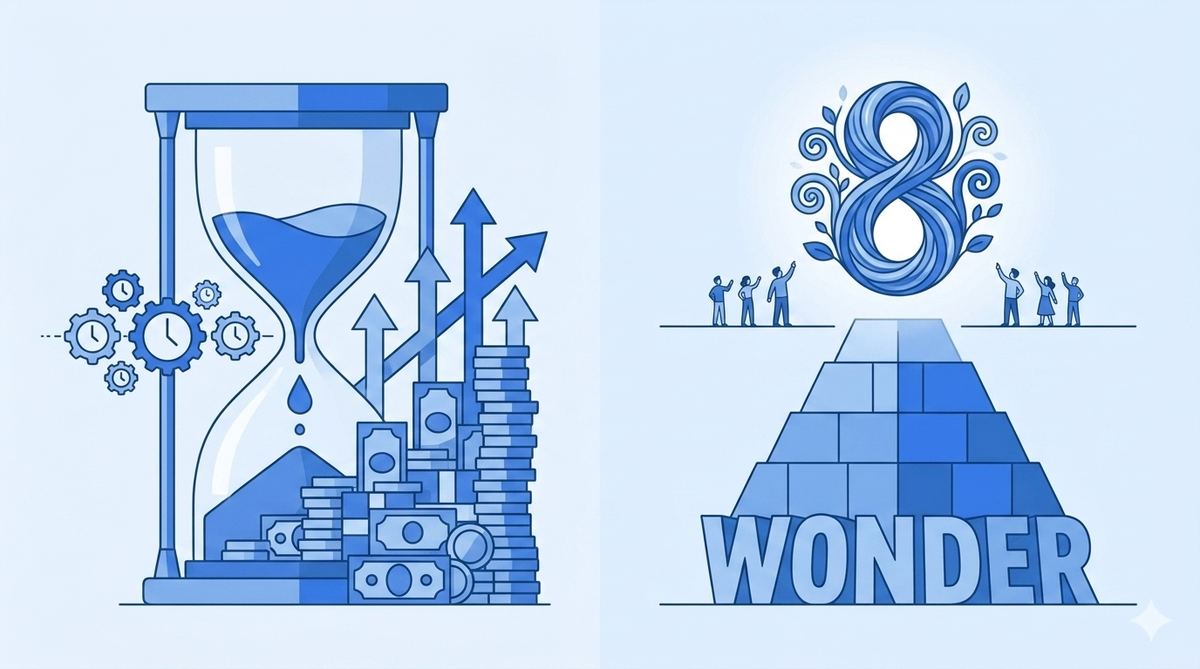
Compound interest is often called one of the most powerful forces in personal finance — not because the math is complicated, but because its effects are easy to underestimate until you see them play out over real time.
The core idea, simply
Simple interest is calculated only on your original principal. Compound interest is calculated on your principal plus any interest you've already earned — meaning your money starts earning returns on its own returns, not just on the amount you originally put in.
This creates accelerating growth: the longer your money compounds, the faster the growth curve steepens, since each period's gains become part of the base the next period compounds on.
Why time matters more than almost anything else
Because compounding accelerates over time, starting early has an outsized effect compared to contributing more later. Money invested in your 20s has decades to compound, while the same amount invested in your 40s has far less runway — even if the later contribution is larger.
This is why financial advice so consistently emphasizes starting to invest as early as possible, even with small amounts, over waiting until you can contribute more.
Compounding frequency matters, but less than you'd think
Interest can compound annually, monthly, daily, or even continuously — more frequent compounding does produce slightly higher returns, since interest is added to the balance more often. But the effect is modest compared to the impact of your interest rate or, especially, your time horizon.
The power of time, illustrated
Investing $10,000 at a 7% annual return, compounded monthly, grows to roughly $40,000 after 20 years with no additional contributions. Extend that same investment to 30 years instead of 20, and it grows to roughly $81,000 — the extra 10 years more than doubled the result, even though nothing else changed except time.
Frequently Asked Questions
Related Calculators
Published January 26, 2026. This article is for general informational purposes only — read our disclaimer.