Investment · January 27, 2026 · 4 min read
Simple Interest vs Compound Interest: The Real Difference
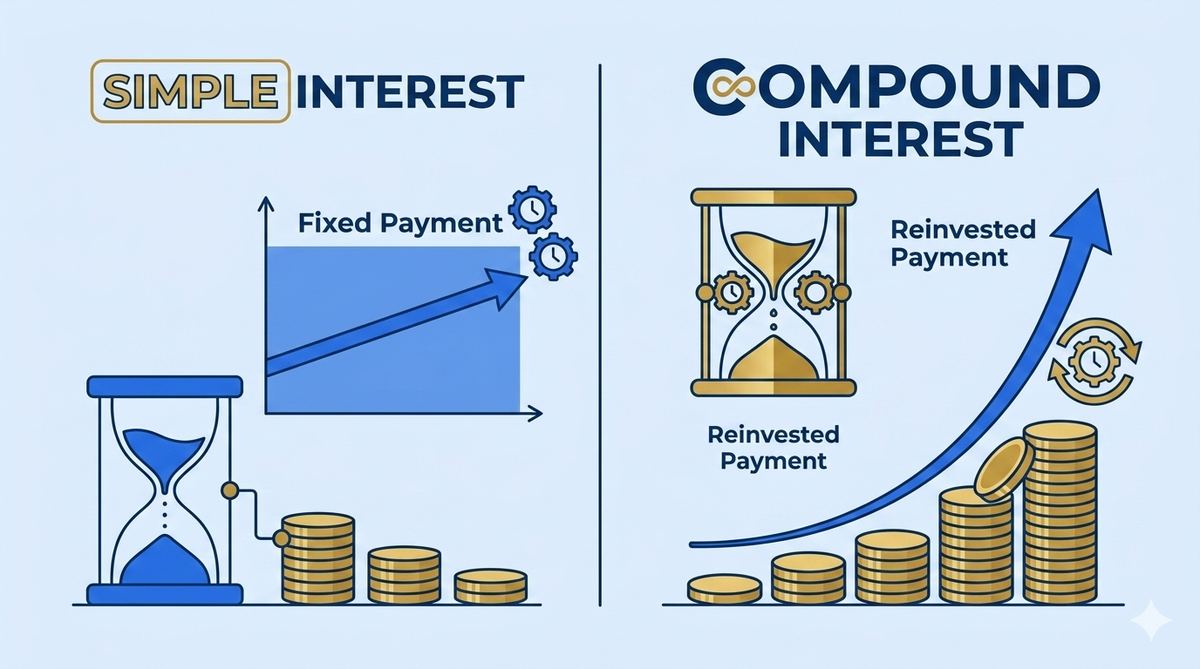
These two terms get used interchangeably in casual conversation, but they describe genuinely different math — and the difference has real financial consequences depending on which one applies to your loan or investment.
Simple interest: a flat rate on the original amount
Simple interest is calculated only on your original principal, for the entire term — it never changes based on interest already earned or paid. The formula is straightforward: principal multiplied by rate multiplied by time.
This makes simple interest predictable and easy to calculate by hand, which is part of why it's used in some short-term loans and specific financial products.
Compound interest: growth on growth
Compound interest is calculated on your principal plus any interest already accumulated, meaning the base it's calculated on grows over time. This produces faster-than-linear growth, especially over longer periods.
Most everyday financial products — savings accounts, credit cards, mortgages, investment accounts — use compound interest, not simple interest, which is why understanding it matters more for typical financial decisions.
Where each one actually shows up
Simple interest is more common in specific contexts: some auto loans, certain short-term personal loans, and some bonds. Compound interest dominates almost everywhere else, including nearly all savings and investment growth, and most consumer debt.
When comparing two financial products, always check which type of interest applies — the difference in total cost or growth can be significant, especially over longer time periods.
The gap widens over time
$10,000 at 5% simple interest for 20 years grows to $20,000 — a straightforward doubling. The same $10,000 at 5% compound interest, compounded annually, grows to roughly $26,500 over the same 20 years. The gap between the two methods grows larger the longer the money sits, since compounding's advantage accelerates over time.
Frequently Asked Questions
Related Calculators
Simple Interest Calculator
Calculate interest earned without compounding — a fixed percentage of the original principal.
Compound Interest Calculator
See how your money grows over time with compounding and optional monthly contributions.
Savings Calculator
See how much your savings could grow with regular deposits and interest.
Published January 27, 2026. This article is for general informational purposes only — read our disclaimer.