Mortgage & Real Estate · February 10, 2026 · 5 min read
Refinancing Your Mortgage: When It Actually Makes Sense
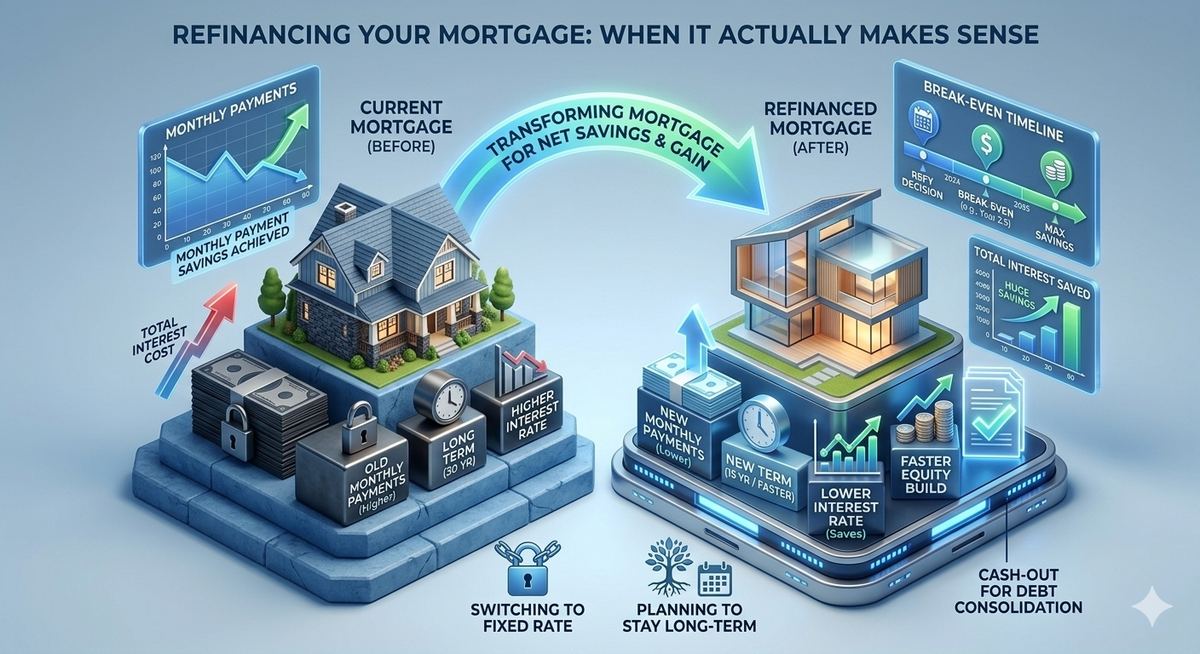
A lower interest rate sounds like an automatic reason to refinance, but the real answer depends on one specific number: how long it takes your monthly savings to cover the closing costs of the new loan.
The break-even point is the real question
Refinancing isn't free — it typically involves closing costs similar to a new purchase loan. The break-even point is how many months it takes your monthly savings from the lower rate to fully offset those costs.
A Refinance Calculator compares your current payment to the new one and calculates this exact break-even timeline, rather than leaving you to estimate it.
Rate drop alone isn't the full picture
A commonly cited rule of thumb suggests refinancing is worth considering once rates drop about 0.75-1 percentage point below your current rate, but this varies significantly based on your loan balance and how long you plan to stay in the home.
A large loan balance can make even a smaller rate drop worthwhile, since the dollar savings scale with the loan size — while a smaller balance may need a bigger rate gap to justify the closing costs.
Shortening your term changes the math entirely
Refinancing from a 30-year into a 15-year term at a lower rate can increase your monthly payment even while dramatically cutting total interest — a different goal than simply lowering your payment. Running both scenarios through a Mortgage Calculator side by side makes the tradeoff concrete.
A break-even example
If refinancing saves $180/month and costs $5,000 in closing fees, the break-even point is about 28 months. Staying in the home well beyond that point makes the refinance clearly worthwhile; moving sooner could mean the closing costs exceed what you saved.
Frequently Asked Questions
Related Calculators
Refinance Calculator
See how much refinancing could save you and how long it takes to break even on closing costs.
Mortgage Calculator
Estimate your monthly mortgage payment and view the full amortization schedule.
Mortgage Payoff Calculator
See how much interest and time you could save by paying extra on your mortgage.
Published February 10, 2026. This article is for general informational purposes only — read our disclaimer.