Auto & Car · January 22, 2026 · 5 min read
Lease vs Buy: Which Car Option Actually Saves You Money?
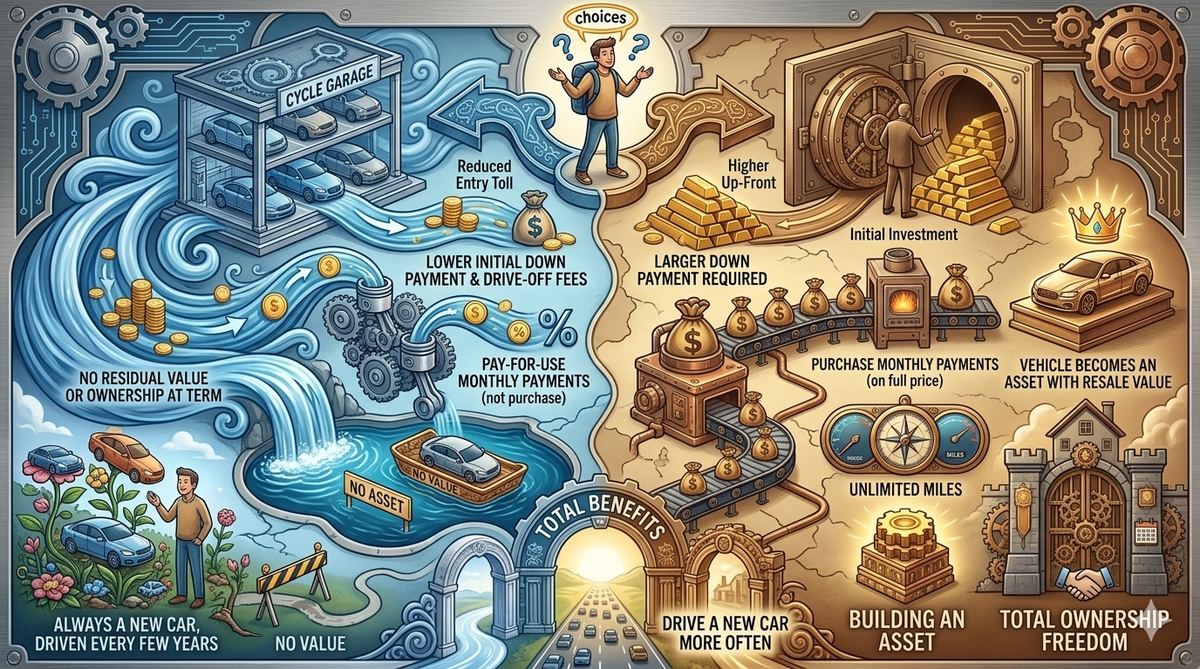
Leasing and buying solve the same problem — getting a car — in fundamentally different financial ways. Neither is universally "better"; the right choice depends on how you drive, how long you keep vehicles, and what you value most.
Here's a clear-eyed look at how the two options actually compare.
How leasing works, financially
When you lease, you're essentially paying for the vehicle's depreciation during the lease term, plus interest and fees — not the full value of the car. This is why lease payments are usually lower than loan payments on the same vehicle.
At the end of the lease, you return the car and walk away, or pay an agreed price to purchase it outright. You never build equity in a leased vehicle the way you do with a loan.
How buying works, financially
When you finance a purchase, your payments go toward actually owning the car. Once the loan is paid off, you have a car with real resale value and no further payments — assuming you keep driving it.
The tradeoff is a typically higher monthly payment than an equivalent lease, since you're paying for the full vehicle rather than just its depreciation.
The hidden costs that change the math
Leases often include mileage limits — commonly 10,000 to 15,000 miles per year — with real per-mile penalties if you exceed them. If you drive significantly more than average, buying often becomes the better deal simply to avoid these overage charges.
Leases also charge for excess wear and tear at return, which can be a real cost if you're not meticulous about the vehicle's condition. Buying eliminates this risk entirely, since the car is yours regardless of its condition.
A rough comparison
Leasing a $35,000 vehicle for 3 years might run about $400/month plus a $2,000 down payment — a total of about $16,400 out of pocket, with nothing to show for it afterward. Financing the same vehicle over 5 years at a similar rate might cost more upfront and per month, but leaves you with a car worth a meaningful resale value once paid off — often making the net cost lower if you plan to keep driving it well past the loan term.
Frequently Asked Questions
Related Calculators
Published January 22, 2026. This article is for general informational purposes only — read our disclaimer.