Home & Cost · February 4, 2026 · 5 min read
Is Solar Worth It? A Realistic Cost-Benefit Breakdown
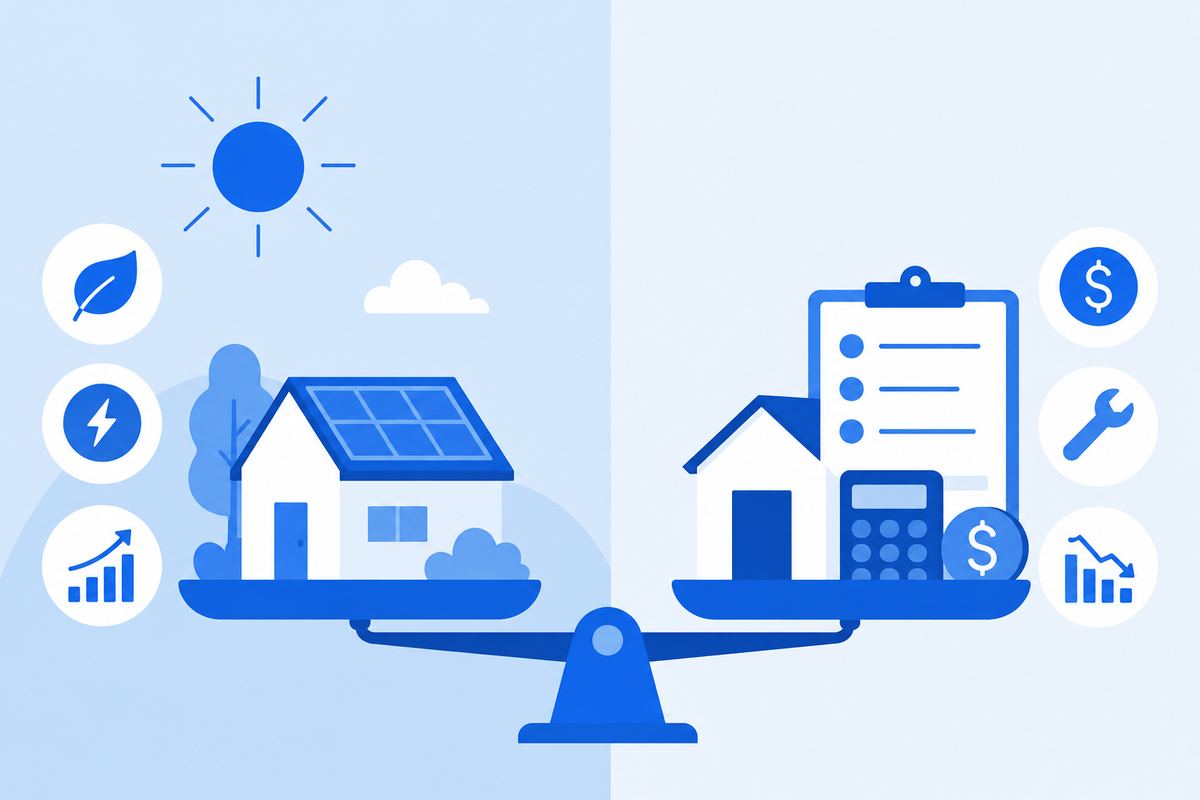
Solar panel decisions come down to a fairly straightforward financial question: how long until the system pays for itself through electric bill savings, and does that timeline make sense for your situation? The honest answer varies significantly by home and location.
The core calculation: payback period
The payback period is how many years it takes for cumulative electric bill savings to equal the system's net cost (after any incentives). A payback period under 10 years is often considered a strong investment, though this threshold depends on personal financial priorities.
This calculation depends on your current electric bill, how much of your usage the system offsets, the system's total cost, and how electricity rates are expected to change over time — utilities typically raise rates gradually, which improves solar's long-term value.
What drives the biggest differences in outcome
Local sunlight exposure matters significantly — the same system size produces meaningfully different amounts of electricity depending on your region's typical sunlight hours. Roof orientation and any shading from trees or nearby structures also affect actual output.
Your current electricity rate matters too: homes in areas with high electricity costs see faster payback than homes with already-low rates, since the savings per kWh offset are larger.
Incentives can significantly shorten the timeline
Federal, state, and sometimes utility-level incentives can substantially reduce your effective system cost, directly shortening the payback period. These programs change over time, so checking current federal and your specific state's offerings before finalizing a decision is worthwhile.
A representative scenario
An $18,000 system (after incentives) offsetting 85% of a $180/month electric bill saves roughly $153/month, or about $1,836/year. At that pace, ignoring further electricity rate increases, the system would pay for itself in a little under 10 years — and continue generating savings for many years beyond that, since panels typically remain productive for 20-25+ years.
Frequently Asked Questions
Related Calculators
Published February 4, 2026. This article is for general informational purposes only — read our disclaimer.