Auto & Car · January 23, 2026 · 5 min read
How to Get the Best Auto Loan Rate in 2026
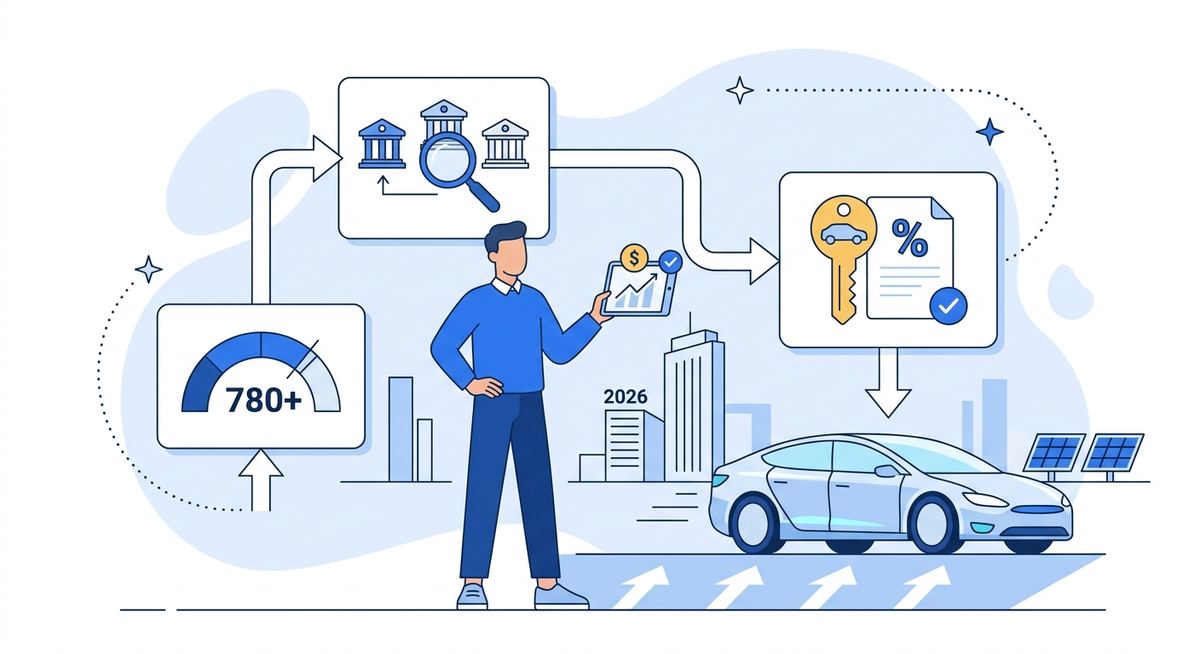
The interest rate on your auto loan can vary dramatically depending on a handful of factors within your control — and the difference between a good rate and an average one can add up to thousands of dollars over the loan's life.
Here's what actually moves the needle on your rate, in order of impact.
Your credit score matters most
Lenders reserve their best rates for borrowers with strong credit, typically scores above 720. If your score is on the lower end, even a modest improvement before applying — paying down credit card balances, disputing errors, avoiding new credit inquiries — can shift you into a meaningfully better rate tier.
Shop multiple lenders within a short window
Getting quotes from several lenders — banks, credit unions, and dealer financing — lets you compare real offers instead of accepting the first one. Credit bureaus generally treat multiple auto loan inquiries within a short window (commonly 14-45 days depending on the scoring model) as a single inquiry, so rate shopping doesn't meaningfully hurt your score.
Credit unions in particular are often worth checking, since they frequently offer lower rates than traditional banks or dealer financing on comparable loans.
Loan term and down payment both affect your rate
Shorter loan terms often come with lower rates, since the lender's risk window is smaller. A larger down payment reduces the amount financed and can also improve your rate, since it lowers the lender's risk if the vehicle needs to be repossessed and resold.
New cars also typically qualify for lower rates than used cars, since they're seen as lower-risk collateral.
Get pre-approved before visiting the dealership
Walking into a dealership with a pre-approved rate from your own bank or credit union gives you a real number to negotiate against — dealer financing may match or beat it, but you won't know unless you have a comparison point already in hand.
Why the rate difference matters
On a $28,000 loan over 60 months, the difference between a 6% rate and a 10% rate is roughly $58/month — which adds up to about $3,500 in extra interest paid over the life of the loan, for the exact same car.
Frequently Asked Questions
Related Calculators
Published January 23, 2026. This article is for general informational purposes only — read our disclaimer.