Investment · February 14, 2026 · 4 min read
How Often Should Interest Compound? Daily vs Monthly vs Annually
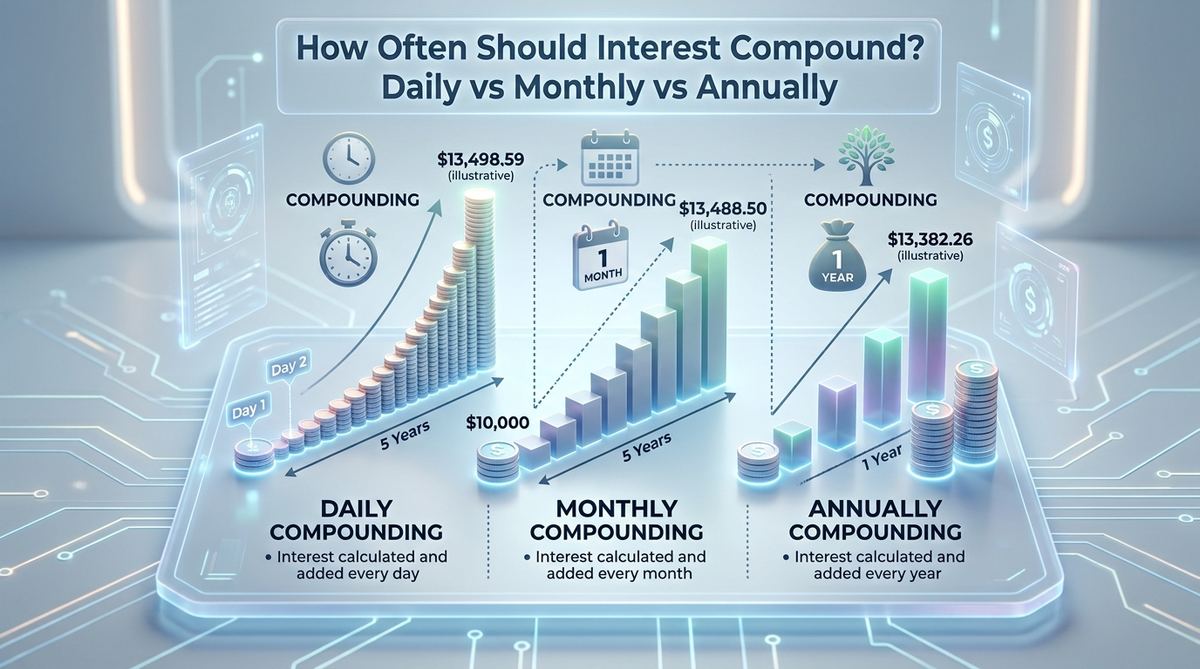
Savings accounts and investments compound at different frequencies — daily, monthly, quarterly, or annually — and the difference sounds like it should matter a lot. In practice, it's a smaller factor than most people expect.
More frequent compounding does help, modestly
Interest calculated and added to your balance more often means each new calculation includes slightly more accumulated interest than a less frequent schedule — so daily compounding produces marginally higher growth than annual compounding at the same stated rate.
Why the effect is smaller than people expect
The difference between daily and annual compounding at a typical rate is usually a fraction of a percentage point in final results — meaningful over very long periods and large balances, but rarely the deciding factor in a financial decision.
Comparing the same principal and rate at different compounding frequencies in a Compound Interest Calculator makes the actual size of the difference concrete rather than theoretical.
What actually matters more
Your interest rate and your time horizon both have a dramatically larger impact on final returns than compounding frequency. When comparing two financial products, prioritize checking the rate and any fees before worrying about how often interest compounds.
Comparing frequencies directly
On $10,000 at 5% for 10 years, annual compounding grows to about $16,289, while daily compounding grows to about $16,487 — a difference of roughly $200 over an entire decade, illustrating just how small the frequency effect is compared to the rate itself.
Frequently Asked Questions
Related Calculators
Published February 14, 2026. This article is for general informational purposes only — read our disclaimer.